
Africa has no shortage of talent… What it has historically lacked is access.
For decades, some of the continent’s brightest minds have faced barriers that have little to do with capability and everything to do with geography, infrastructure, and opportunity. As technology continues to reshape how work is organised and value is created, a new generation of founders is emerging with a simple but powerful thesis: talent should be borderless.
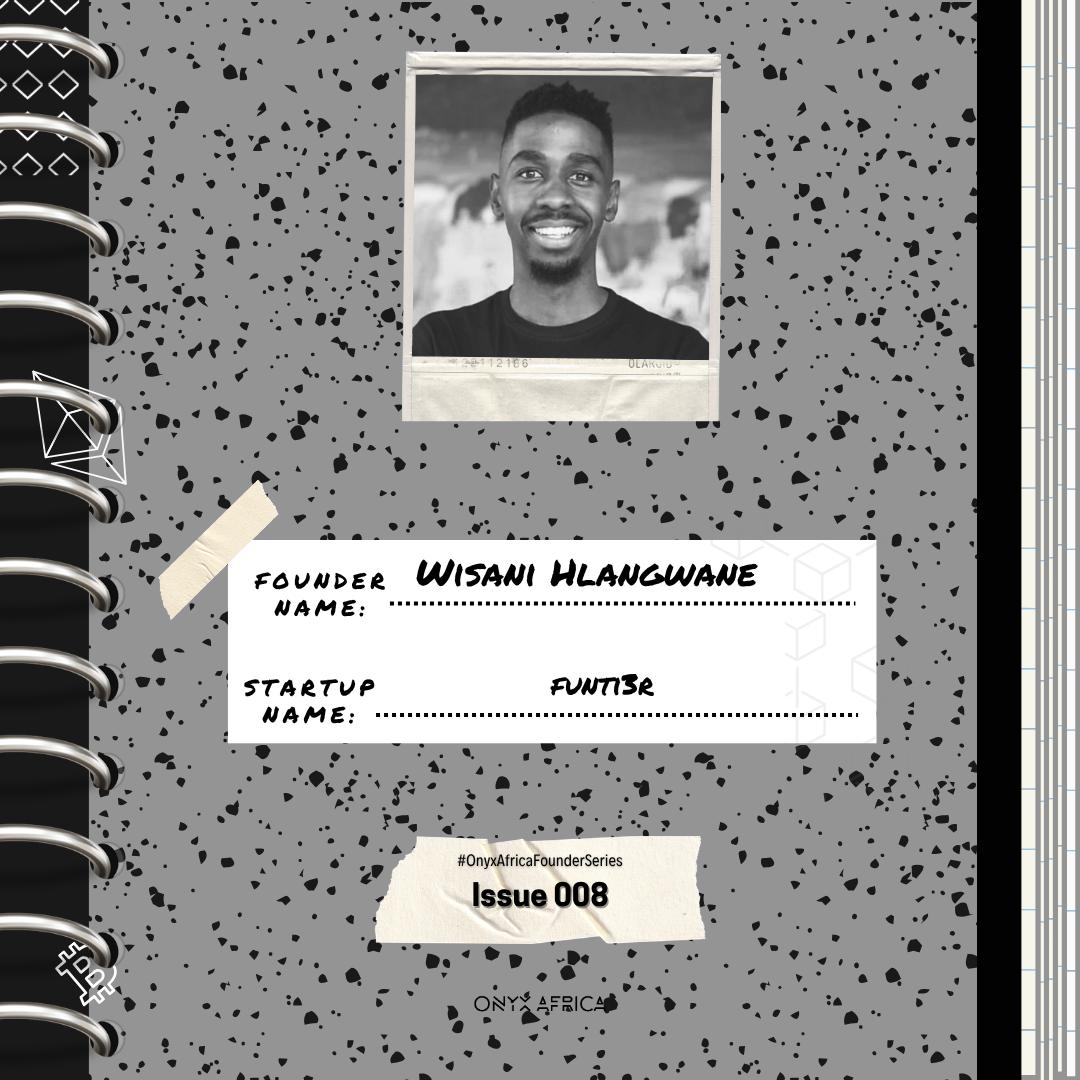
One of those founders is Wisani Hlangwane, Co-Founder and CEO of Funti3r, an AI and blockchain-powered workforce platform helping businesses discover, manage, and scale talent across Africa and beyond. Fresh off being recognised as Best Enterprise Startup 2025 at AfricArena and earning a place on Forbes Africa’s 30 Under 30 list, Wisani is building at the intersection of workforce management, skills development, and frontier technology.
We sat down with him to discuss the genesis of Funti3r, the future of work, and why he believes Africa’s greatest export is its people.
Wisani, every great venture has an origin story; I’m interested in the genesis. What inspired you to step into the Web3/blockchain/crypto space? Was it a particular moment, a problem you saw, or just a gut feeling that this was where the future was headed? Was there a lightbulb moment? Where you thought, ‘this is how Africa’s talent can/will compete globally.”
You know, for me, it all started from a deep frustration: watching brilliant, hardworking Africans grind every day but never really get to participate in the global economy on their own terms. I saw people with skills, with hunger, with ideas… but trapped by borders, bureaucracy, and bad systems.
Then one day, it hit me: we don’t lack talent, we lack access.
When I came across blockchain, it wasn’t the coins or the hype that grabbed me, it was the freedom architecture. The idea that code could remove middlemen, that a kid in Soweto could collaborate with a startup in Berlin or San Francisco without begging for permission… That was powerful.
But there was also a personal side to it. I’ve always believed that most of the decisions we make in life boil down to fun and money — how we earn it, how we spend it, and how we find joy along the way. I wanted to create something that merged both — a fun way to make the most money in my lifestyle while exploring frontier tech, and that’s how Funti3r was born; a play on “fun” and “frontier.” It’s about building at the edge of innovation while living fully. Because work shouldn’t just make you wealthy; it should make you alive.
So when people ask what inspired Funti3r, I say: it’s a blend of freedom, fun, and financial independence. And underneath it all is one mission — to put power back in the hands of the person.
That’s really what Power to the Person means — not just technology, but liberation. That’s the mission that keeps me up at night and wakes me up early every morning.
There are plenty of talent marketplaces out there. What makes Funti3r different? You talk about accurate project matchmaking, workforce management, and a pan-African footprint. Regarding your intelligent matchmaking system. How does this work and what role does technology play in ensuring there’s a right match between talent and projects? How do you ensure that businesses get the best talent and talent gets the best opportunities?
Look, the world doesn’t need another Upwork clone. What we’re building is more than a gig marketplace — Funti3r is a workforce operating system for the decentralized economy.
Here’s the difference:
- We don’t just connect talent to projects; we prepare them, verify them, and automate the messy parts of workforce management.
- Our platform uses intelligent matchmaking — think of it like “Tinder meets Salesforce,” but for work. It aligns a company’s project requirements with the exact skill sets, verified credentials, and performance data of our talent base.
- Then we wrap it with blockchain — so payments are transparent, tasks are tokenized, and achievements are verifiable.
So, while others are selling “access,” we’re building infrastructure. Funti3r is not just a place to find talent — it’s a place to grow it, manage it, and scale it globally.
Funti3r focuses heavily on skills development, workforce management, and business solutions. Why these three pillars specifically?
Because those three are the holy trinity of future work.
- Skills development keeps our talent future-proof. Tech moves fast — if we don’t train people continuously, we leave them behind.
- Workforce management helps businesses scale without chaos. Every startup, agency, or corporate wants flexibility, but they also need visibility and accountability.
- And business solutions? That’s how we bridge enterprise pain points — from reducing operational costs to managing compliance and culture across borders.
In short: skills make the people better, management makes the work better, and business solutions make the system sustainable.
With skills development as a core to your model. How do you train talent for Web3-specific roles?
We use a blended model — learn, earn, and prove.
First, our nano courses introduce the fundamentals — blockchain, smart contracts, DAOs, DeFi, all in a practical way. Then we link that directly to micro tasks on live projects. So instead of saying, “I learned Web3,” our members can say, “I deployed this smart contract” or “I contributed to a DAO.”
On top of that, every task completed becomes a verifiable credential on-chain. It’s like a living CV that updates itself — transparent, portable, and immutable.
That’s how we’re not just training — we’re transforming learning into proof of work.
Your achievements keep stacking up… Congrats on winning Best Enterprise Startup 2025 at AfricArena! You mentioned in your LinkedIn post that you had to put some skin in the game and take a speculative bet on yourself… What was that experience like? What do you think set Funti3r apart from the competition? And now that you’ve won, what does this recognition mean for you and for Funti3r’s future?
Winning Best Enterprise Startup hit differently because, honestly, it was personal.
We bootstrapped, we took hits, we reinvested every cent, and we kept believing when it didn’t make sense. So when Funti3r was named Best Enterprise Startup 2025, it felt like a validation — not just of the product, but of the grind behind it.
AfricArena is a tough stage — world-class startups, serious competition. But what set us apart was our clarity of purpose. We weren’t just pitching tech; we were pitching a movement.
And for me, it proved something I’ve always said: when you bet on yourself and back it up with execution, the universe bets on you too…
The Forbes recognition was surreal, man. Seeing your name on that list isn’t just validation; it’s a responsibility. It tells you that your work matters — not just in business, but in shifting narratives about what’s possible for African founders.
Forbes recognized our work in human capital technology, and that’s huge because it means people are finally seeing that the future of Africa isn’t just in crypto or fintech — it’s in people tech.
It also amplifies our mission: to make African talent discoverable, trusted, and unstoppable on the global stage.
Africa has a rapidly growing talent pool, but access to global opportunities is still a challenge. How do you see blockchain and Web3 playing a role in transforming this space? Do you think decentralized platforms could redefine how work is structured across borders?
Web3 is the bridge we’ve been waiting for. It breaks borders, reduces friction, and introduces trust without middlemen.
Imagine this: instead of needing a foreign company to “validate” your worth, your work itself becomes proof — visible, verifiable, and valued. That’s the promise of decentralized identity and on-chain credentials.
It’s not about making everyone a crypto bro — it’s about giving ownership back to people who’ve always been excluded from it.
Africa’s Web3 scene is booming, but talent gaps persist. Where’s the biggest opportunity: more devs, better education, or infrastructure? What’s Funti3r’s role in closing that gap?
Three words: education, infrastructure, and imagination.
We need to educate people beyond trading and speculation — into building, developing, and governing.
We need infrastructure that speaks to African realities — connectivity, payments, regulation.
And we need imagination — the courage to build new systems, not copy old ones.
That’s Funti3r’s role: we’re the bridge between global demand and African genius.
You’ve got a global vision but African roots. What’s one “unfair advantage” African talent has in Web3 that the world doesn’t see yet?
Resilience.
African talent knows how to innovate with constraints. We’re used to making a plan — from running a startup during loadshedding to scaling with no funding. That builds a muscle most people don’t even know they need yet.
So when the global economy gets tough, African talent thrives — because we’ve been antifragile from day one.
As a Pan-African research agency focused on Web3, Onyx Africa is always looking at ways to leverage blockchain to empower businesses and talent… Is there an opportunity for collaboration between a platform like Funti3r and an organization like ours? How do you see research and talent marketplaces intersecting in the Web3 era?
Absolutely. Onyx focuses on research and insights; we focus on execution and talent activation. If we merge those two — knowledge and action — we can create a data-driven, talent-powered ecosystem for the entire continent.
Imagine this: Onyx identifies the trends and skills gaps; Funti3r mobilizes the workforce to fill them. That’s how you create a feedback loop for real impact.
2030 prediction: What % of Funti3r’s talent pool will be working on blockchain projects? And what’s your moonshot for the company?
By 2030, I believe at least 60% of our global talent pool will be contributing to blockchain-based projects — from AI automation to DAO governance.
Our moonshot?
To make Funti3r the default launchpad for frontier talent worldwide — Africa leading the charge, but connected to every innovation corridor on the planet.
We’re not building a startup anymore — we’re building a new economic operating system for the next generation of work.
Wisani, your blueprint is simple: bet on yourself, bet on African talent, and build bridges – not gatekeepers… As Web3 reshapes how we work, Funti3r isn’t just keeping pace; it’s laying the tracks. Thank you very much for sharing your insights and expertise on the work you’re doing to revolutionize workforce management by leveraging blockchain technology and AI-powered talent solutions.
As Web3 reshapes how we work, Funti3r is not simply adapting to the future of work; it is helping build it… From skills development and workforce management to verifiable credentials and borderless opportunity, the company’s vision extends beyond matching talent with projects… It is about creating infrastructure that enables people to participate in the global economy on their own terms.